
Product Description
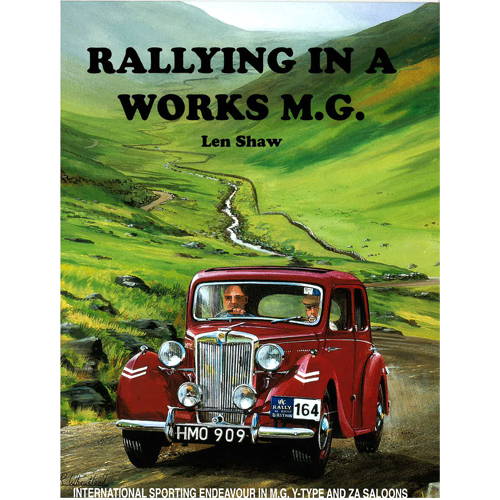
Published 1997, author Len Shaw
2nd Hand book, Excellent condition

£60.00
Published 1997, author Len Shaw
2nd Hand book, Excellent condition

2nd hand soft cover, 126 pages, good condition
MG 1965-1980 Photo Archive
Published by Iconografix in 1996. The aim of this series of books is to preserve history through the publication of notable photographic archives
128 pages
26cm x 21.5cm
It is a collection of photographs, with captions, featuring the following MG models – Midget, MGB, MGC, Sedans and Prototypes

Not only is this book the definitive work because Wilson McComb was on the inside at MG for a decade, it is doubly so because the author knew exactly how a complex story such as this should be researched and told. Osprey are proud to have employed the talents of a comparable expert.. From Cecil Kimber and the Bullnose MGs of the 1920s, to the thirties Midgets, the Magnettes, the TCs, the MGA, MGB, even the Metro and Maestro, every twist in the tale was followed by Wilson McComb, with an intimate knowledge not only of machinery but also of men, those who created the marque, some who abused it. There are not many more interesting automotive stories than that of the Octagon to be told, and MG will be one of the few British marques to make it into the 21st century.
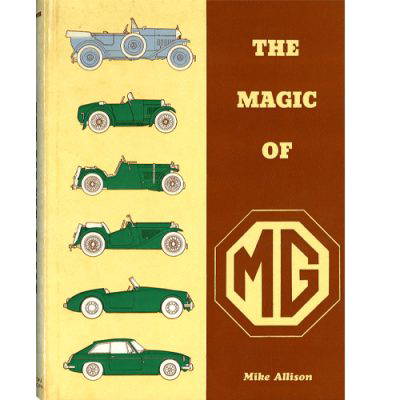
When Cecil Kimber began tuning and modifying Morris cars in the early ‘twenties, he little realised that these embryonic M.G. Cars would establish a name which, in the course of time, was to be¬come that of Britain’s best known sports-car. Mike Allison, a keen M.G. Enthu¬siast, very involved in the M.G. Car Club and at one time working at Abingdon, traces the history of M.G. Cars, with the use of around 400 photographs, from the early days of the Bullnose MG, 14/40, 18/80, 18/100, through the triple M cars (Midgets, Magna and Magnette models of the 1930’s), the pre war comfort models VA, SA and WA, and the immortal T series cars. Then he moves onto postwar production of the Y Types, ZA and ZB range, 1100, 1300 and finally the A, B, C model ranges. The achievements in competition do not go unrecorded, with a selection of illustrations showing cars in events, such as the pre war Mile Miglia, and record breaking cars such as EX181. Photographs of all the models and most of the specialist coach¬work show the interesting de¬velopment of a marque that has won the hearts of many a man.
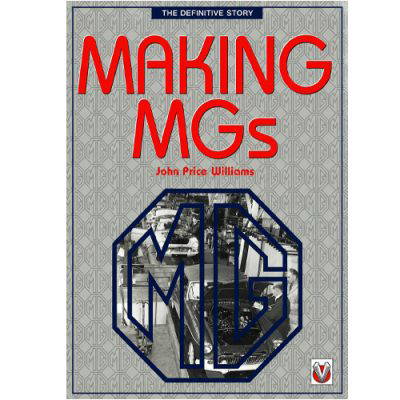
From MGA to MGF, here’s the illustrated story of how the classic MGs were built. Most of the pictures were taken at MG’s famous Abingdon factory, and show just how skilled and dedicated workers put MGs together before the advent of robot car production. More recent pictures include the MG RV8 and MGF.
Concise text describes production processes and model evolution. Coverage includes factory road testing and production figures.
Featured MGs include MGA, Magnette, Midget, MGB, MGC, MGB GT V8, MGF.


