
Product Description
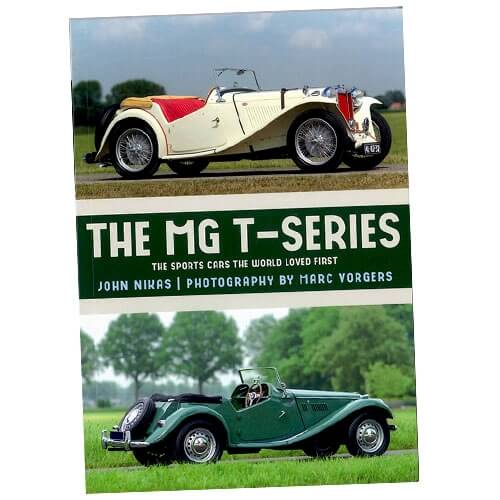
The sports cars the world loved first!
Written by John Nikas – 2017

£15.99
The book covers the technical developments such as the introduction of synchromesh gearing and hydraulic brakes as well as new engines. Due to the post-war popularity of the cars in the US after American Gls shipped examples back from Britain, modifications were made for US editions. Soon celebrities such as Clark Gable were driving them. In this readable and informative book, the author follows the development of the various MG T-Series models, incl. the prewar Midgets and the MG TC, TD and TF
The sports cars the world loved first!
Written by John Nikas – 2017
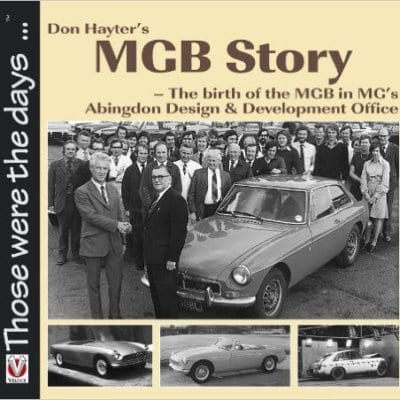
This is the inside story of the MG Design office, from 1956 until its closure in 1980. Explaining how the various models were drawn, planned, and developed by the small team of engineers, it also shows how the input and control changed from Morris, Wolseley, Riley Group, Austin-Morris, and Austin Rover. The effects of the Triumph-Austin merger are detailed in model changes, alongside the effects of safety legislation, mainly imposed by the United States. Trying to remain as individual as possible during this period, MG developed record breakers and a unique Competition Department. Special cars were built and tested, and prototypes for the MGB replacement were drawn up all in parallel with the development of MG production cars using engines from any part of the company.

MG expert Roger Parker gives his advice on maintaining and modifying MGB, GT and GTV8 cars, with some additional reference to the MGC and MG RV8 models.
With safety information throughout, the book covers: regulations, insurance and market value for all models; routine maintenance; body and interior changes; brakes, suspension and steering; engine improvements for the original 1798cc B-series engine and other engine alternatives and finally, installing and updating electrical equipment and lighting.
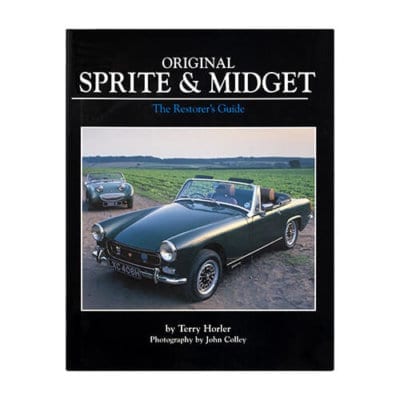
The ideal guide for authentic restorations, covering Sprite and Midget models manufactured from 1958 to 1979. The best source for original specifications and equipment for every Austin-Healey model produced, from the first Sprites of 1958 and the Mk1 MG Midgets of 1961; to the 1971 Sprite MkV and the 1974 Midget MkIV.
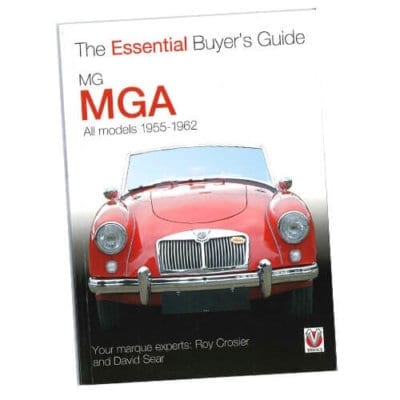
Having this book in your pocket is just like having a real marque expert by your side. Benefit from the author’s years of MGA ownership, learn how to spot a bad car quickly and how to assess a promising one like a professional. Get the right car at the right price! Judged by many to be the most attractive MG ever produced, the MGA is not only good-looking, but also fun to drive, coping very well with modern traffic demands. In this book you will find advice on choosing the right model, and discussion about potential ownership costs. Practicality and comfort are considered, allowing you to assess suitability for touring, and issues of legality, originality and roadworthiness are also raised. With information for a quick and easy condition evaluation, leading if required to a more serious one with a unique marking system, plus 100 colour photographs, this is a must-buy for anyone thinking of purchasing an MGA. Features: * See through the eyes of experienced MGA owners, and bring 40+years of expertise to your search for the perfect MGA * Full coverage of all 1500, 1600 and Twin Cam roadsters and coupés * Where and how to buy an MGA * Advice on choosing the right model and condition * Key checks how to spot a bad car quickly * Comprehensive inspection guide * In-depth analysis of strengths and weaknesses * Discussion of desirable upgrades, as well as modifications to avoid * Market and value data predicts which models will become collectable * Details of club back-up and support organisations


